
Caribbean Coastal Acidification Network
Cari-CAN plays a key role in strengthening regional collaboration, expanding knowledge, conducting monitoring and research, and supporting science-based solutions to address acidification across the U.S. Caribbean.
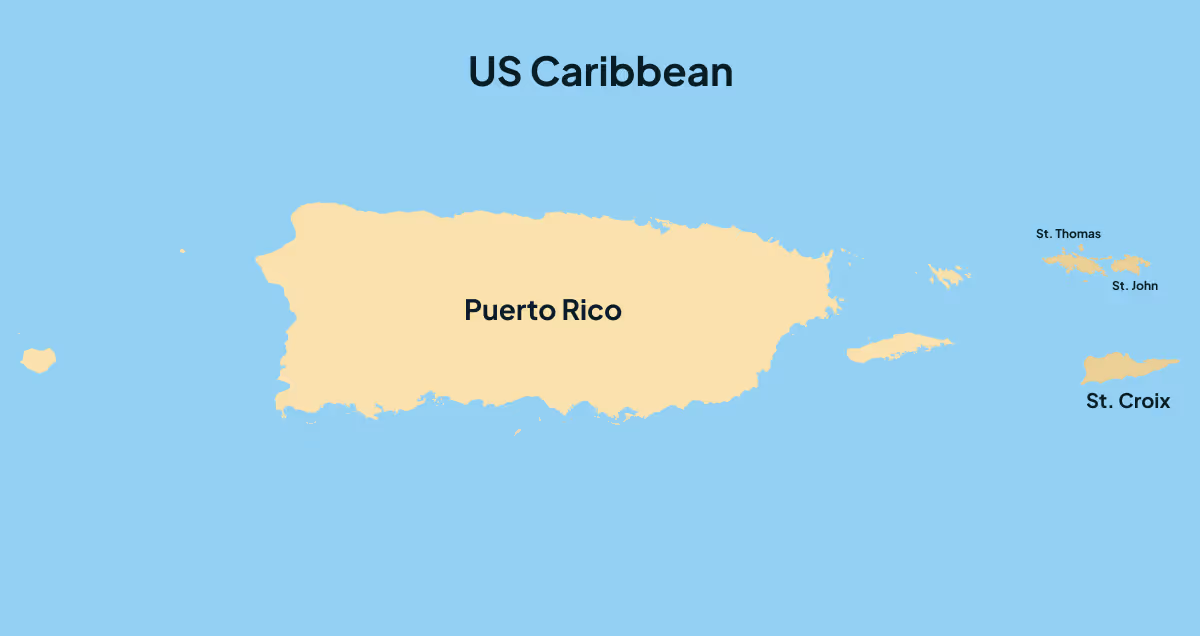
Cari-CAN Serves the U.S. Caribbean
Cari-CAN, hosted by the Caribbean Coastal Ocean Observing System (CARICOOS) regional association, was established in 2024 with support from the NOAA Ocean Acidification Program (NOAA OAP).
The Cari-CAN region encompasses two insular U.S. territories, Puerto Rico (PR) and the US Virgin Islands (St. Thomas, St. John, and St. Croix).
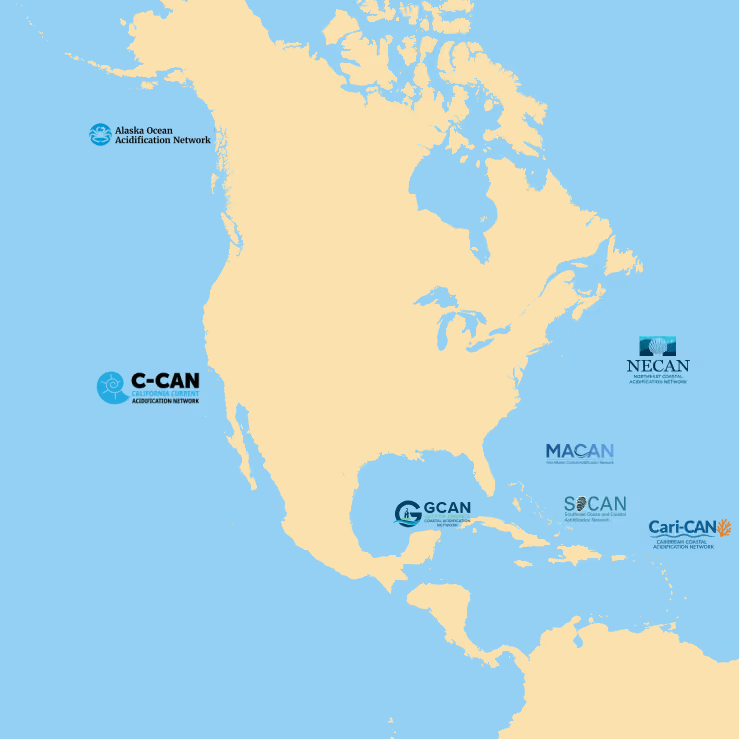
NOAA OAP Coastal Acidification Networks
Cari-CAN is one of seven coastal acidification networks supported by NOAA's Ocean Acidification Program (OAP). These networks coordinate monitoring, share data, and advance solutions tailored to regional needs. Together, they strengthen collaboration, improve scientific understanding, and support informed decision-making to protect coastal ecosystems and communities.
Cari-CAN
GCAN
NECAN
A OAN
SOCAN
MACAN
C-CAN
Working Together to Address Ocean and Coastal Acidification
Cari-CAN connects science, communities, and decision-making to strengthen coastal resilience across the Caribbean.
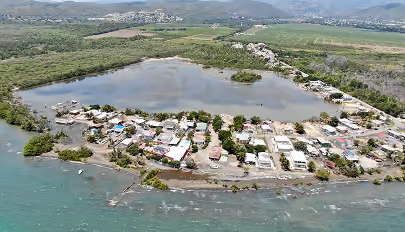
Coastal Communities
Provide accessible information and educational tools to help communities and industries understand risks and make informed decisions to protect livelihoods, safety, and well-being.
Researchers & Restoration Practitioners
Improve access to data, and build capacity to advance monitoring, applied research, and restoration strategies in the face of acidification.
Decision Makers
Deliver information and technical support to guide policies, planning, and management actions that enhance coastal ecosystem and community resilience.

What we work toward
Advance Science
Strengthen research and monitoring efforts to improve understanding of the drivers, trends, and impacts of ocean acidification on Caribbean coastal ecosystems.
Build Regional Capacity& Collaboration
Enhance the capacity of local institutions, resource managers, restoration practitioners, and communitiesto interpret and apply OA knowledge through partnership, training, and shared resources.
Increase Awareness and Engagement
Expand public understanding of ocean acidification and its ecological and socioeconomic implications through accessible education, outreach, and communication tailored to diverse audiences.
Support Informed Action
Provide science-based insights to guide restoration, policy, and management strategies that enhance coastal resilience and sustainability.
Steering Committee
Regional experts guiding Cari-CAN's mission, vision and priorities to advance response to ocean and coastal acidification in the U.S. Caribbean.