
Learn About Ocean Acidification
Discover the science of OA to stay aware, take action, and actively engage in adaptation and mitigation efforts.

Understanding OA Essentials
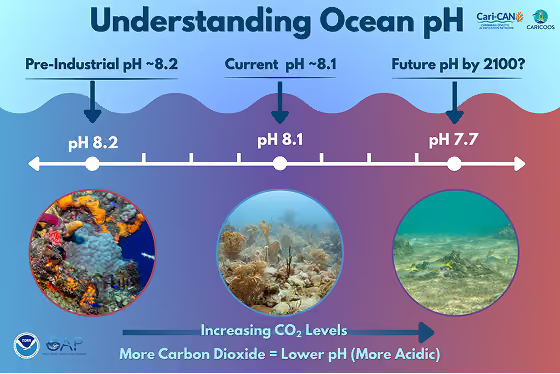
Ocean pH
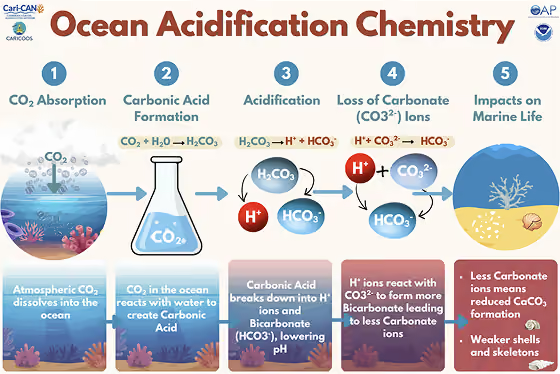
Ocean Acidification: The Chemistry
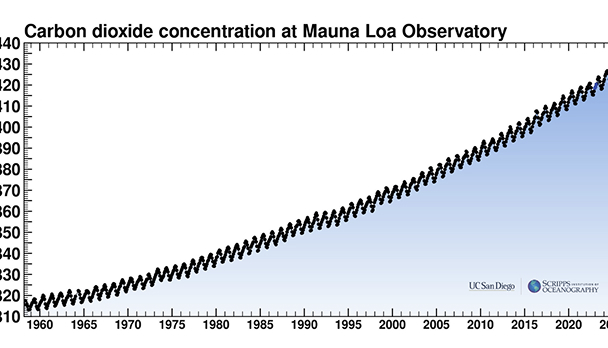
Signals of a Changing Ocean
Changes in seawater chemistry help track ocean acidification over time.
pH (Acidity):
How acidic the water is.
Partial Pressure of CO₂ (pCO₂):
Amount of carbon dioxide dissolved in seawater.
Total Alkalinity (TA)
The ocean’s ability to resist acidification.
Dissolved Inorganic Carbon (DIC)
Total amount of inorganic carbon present in water.
Educational Resources
Publications
Compilation of key global and Caribbean-focused research on ocean acidification, including its drivers, impacts on marine ecosystems, and implications for coastal communities and economies.
Frequently Asked Questions
It affects coral reefs, seafood, tourism, and coastal protection, things many Caribbean communities depend on. Coastal areas such as mangroves, bays, and lagoons, especially those with limited water exchange or high runoff, can experience stronger acidification. These areas often face multiple stressors like warming, pollution, and Sargassum influxes.
The Caribbean depends heavily on coral reefs for coastal protection, fisheries, and tourism. Ocean acidification weakens coral structures, making reefs more vulnerable to storms and reducing their ability to support marine life and local economies.
Even small increases in acidity can have big impacts on some marine life. Many studies suggest calcification rates could be reduced between 20-60% at 7.9 pH. This is why actions that slow or reverse acidification even a little can also benefit marine ecosystems.
It affects ecosystem health, fisheries, tourism, and coastal protection, key components of the Caribbean economy. Reducing pollution, managing runoff, and protecting habitats can help mitigate local impacts.
Aragonite is one of the more soluble forms of calcium carbonate and is widely used by marine calcifiers. Aragonite Saturation State is the measurement that indicates how favorable conditions are for organisms to build calcium carbonate structures (e.g. shells and skeletons). Lower values mean more stressful conditions.
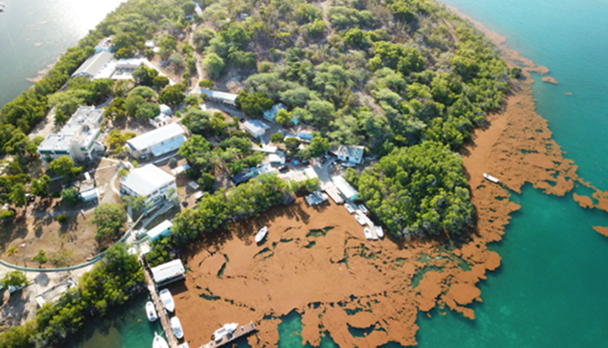
When large amounts of Sargassum accumulate and decompose in coastal areas, they consume oxygen and release CO₂. This lowers pH and can intensify local acidification, especially in nearshore environments.
Reducing CO₂ emissions is the most effective way to slow this process. Implementing adaptation strategies and local protection such as improving water quality, investing in renewable energy, protecting coastal marine ecosystems, and reducing pollution can help increase resilience.
Efforts include long-term monitoring, research, education, and regional collaboration through initiatives like Cari-CAN. These efforts help improve understanding, increase engagement, inform decision-making, and support adaptation strategies.
Ocean pH has dropped 0.1 units since the industrial era, a 30 percent increase in acidity. In the Caribbean, coastal waters can acidify even faster due to local stressors. This can outpace most marine organisms' ability to adapt.
Island nations and coastal communities dependent on fishing face the greatest risk. Small-scale fishers lack resources to adapt. Developing economies bear the burden of a problem created elsewhere.
Need more information?
Reach out to Cari-CAN for research, collaboration, or resources